

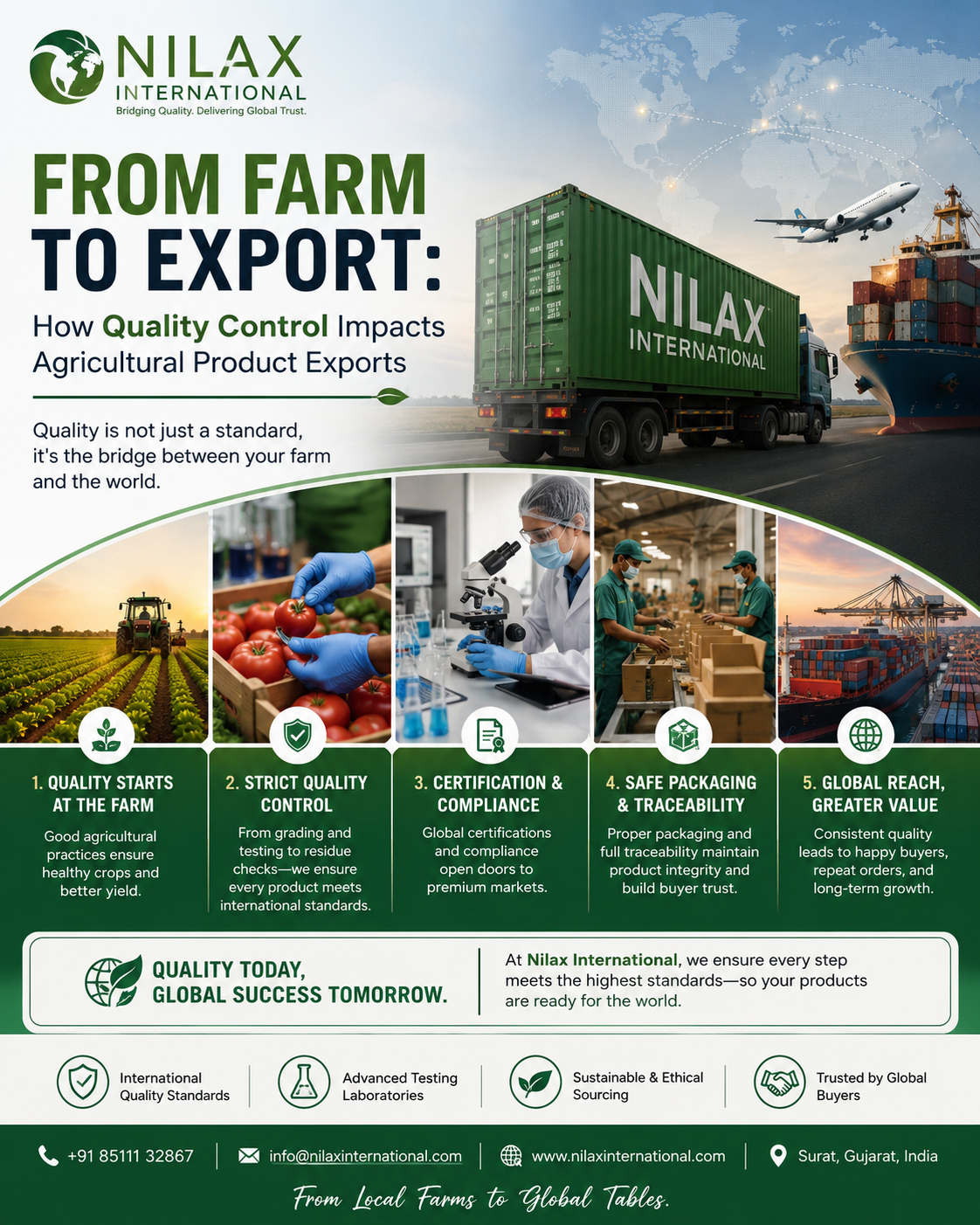
The Growing Importance of Quality in Global Agricultural Trade
The global agricultural export industry has become increasingly competitive as buyers demand higher standards of safety, consistency, and traceability. Whether sourcing herbs, spices, medicinal plants, seeds, or superfoods, importers today expect products that meet strict international quality requirements.
In international trade, quality is no longer simply an advantage—it is a necessity. A single quality issue can affect product acceptance, customer trust, regulatory compliance, and long-term business relationships.
This is why successful exporters invest heavily in quality control systems that monitor every stage of the supply chain, from cultivation and harvesting to processing, packaging, and final shipment.
Quality Control Begins at the Farm Level
The journey of every agricultural product starts at the source. Quality control begins long before products enter processing facilities.
Several factors directly influence product quality:
- Soil Conditions
- Climate and Growing Environment
- Farming Practices
- Harvest Timing
- Crop Handling Methods
- Storage Before Processing
Proper monitoring during cultivation helps ensure that raw materials meet the standards expected by international buyers.
Experienced exporters understand that premium products cannot be created through processing alone. High-quality exports begin with carefully selected agricultural sources and strong relationships with farmers and suppliers.
Why Consistency Matters for International Buyers
Global manufacturers require consistency across every shipment they receive. Whether a company purchases herbs for pharmaceutical production or seeds for food manufacturing, maintaining uniform quality is essential.
Buyers typically evaluate suppliers based on:
- Product Appearance
- Purity Levels
- Moisture Content
- Color Consistency
- Foreign Matter Control
- Packaging Quality
- Product Stability
Inconsistent quality can disrupt manufacturing processes and increase production costs, making reliable suppliers highly valuable in international markets.
The Role of Processing Facilities in Maintaining Quality
Once agricultural products are harvested, proper processing becomes critical.
Modern processing facilities help maintain product integrity through:
- Advanced Cleaning Systems
- Sorting and Grading Procedures
- Hygienic Handling Practices
- Quality Inspection Protocols
- Controlled Storage Conditions
- Export-Grade Packaging
Companies with decades of export experience, such as Nilax International, understand the importance of maintaining quality standards throughout the processing cycle. By implementing structured quality management procedures, exporters can help ensure products meet the expectations of international customers across multiple industries.
Watermelon Kernels: A Perfect Example of Quality-Driven Processing
Watermelon kernels have become increasingly popular among food manufacturers due to their nutritional value and versatility. However, maintaining premium quality requires specialized processing techniques.
Quality watermelon kernels must undergo careful:
- Cleaning
- Sorting
- Dehusking
- Grading
- Moisture Control
- Packaging
Even minor quality issues can impact product performance in food applications such as bakery products, health snacks, protein blends, confectionery items, and functional foods.
This is why buyers often prefer specialized suppliers like Watermelon Kernel India, where dedicated processing and quality-focused operations help ensure kernels meet international food industry standards.
As consumer demand for nutrient-rich superfoods continues to grow, quality control remains one of the most important factors influencing purchasing decisions.
Quality Standards in Herbal Product Exports
The herbal and wellness industries operate under particularly stringent quality expectations. Products used in supplements, herbal formulations, traditional medicine, and pharmaceutical applications must meet strict specifications.
Among India’s most exported medicinal herbs, senna products represent an excellent example of how quality impacts market acceptance.
Quality evaluation for senna products often includes:
- Leaf Purity
- Color Consistency
- Moisture Levels
- Foreign Matter Control
- Proper Drying Procedures
- Hygienic Storage Conditions
Exporters specializing in herbal products, such as Senna India Export, focus on maintaining these quality parameters to meet the requirements of global pharmaceutical and wellness industries.
As international demand for herbal ingredients continues to rise, suppliers with robust quality systems are becoming increasingly important to buyers worldwide.
The Importance of Traceability in Modern Export Markets
Traceability has become a major priority for international buyers and regulatory authorities.
Modern importers increasingly want visibility into:
- Product Origin
- Farming Practices
- Processing Methods
- Quality Testing Procedures
- Storage Conditions
- Supply Chain Documentation
Traceability systems help build trust by providing transparency throughout the production and export process.
For exporters, effective traceability demonstrates accountability and reinforces confidence among customers who rely on consistent product quality and regulatory compliance.
Export Packaging: Protecting Product Quality During Transit
Quality control does not end when products leave the processing facility.
International shipments often travel long distances and encounter varying environmental conditions. Proper packaging helps preserve product quality throughout transportation and storage.
Effective export packaging protects against:
- Moisture Exposure
- Contamination
- Physical Damage
- Temperature Variations
- Product Deterioration
Investing in export-grade packaging helps ensure products arrive in optimal condition, reducing the risk of claims, rejections, and customer dissatisfaction.
Building Long-Term Relationships Through Quality Assurance
One of the most significant benefits of strong quality control is customer retention.
International buyers prefer suppliers that consistently deliver products matching agreed specifications. Over time, reliable quality creates trust and encourages long-term partnerships.
Exporters that prioritize quality often benefit from:
- Repeat Orders
- Stronger Customer Relationships
- Improved Brand Reputation
- Reduced Product Rejections
- Increased Market Opportunities
- Sustainable Business Growth
In a competitive global marketplace, quality assurance becomes a key differentiator that separates trusted exporters from ordinary suppliers.
Why Quality Control Will Continue to Shape the Future of Agricultural Exports
As global regulations evolve and buyer expectations increase, quality control will play an even greater role in agricultural trade.
Future trends are expected to include:
- Enhanced Traceability Systems
- Greater Food Safety Requirements
- Sustainability Monitoring
- Advanced Testing Procedures
- Digital Supply Chain Documentation
- Increased Regulatory Compliance
Exporters that invest in quality infrastructure today will be better positioned to meet future market demands and strengthen their global presence.
Why Buyers Trust Experienced Exporters
For importers sourcing agricultural commodities, experience matters. Established exporters understand the complexities of global trade and the importance of maintaining consistent standards throughout the supply chain.
With decades of expertise in agricultural exports, Nilax International continues to support international buyers by supplying herbs, spices, senna products, watermelon kernels, superfoods, and agricultural commodities that meet global market expectations.
Through specialized divisions such as Watermelon Kernel India and Senna India Export, buyers can access dedicated product expertise backed by a strong commitment to quality, reliability, and customer satisfaction.
Conclusion
Quality control is the foundation of successful agricultural exports. From farm-level cultivation practices to processing, packaging, and shipment, every stage contributes to the final product received by international buyers.
As demand for premium herbs, spices, medicinal plants, watermelon kernels, senna products, and superfoods continues to grow, exporters that prioritize quality assurance will remain preferred partners in global markets.
For businesses seeking reliable sourcing solutions, working with experienced exporters that maintain strict quality standards helps ensure product consistency, regulatory compliance, and long-term supply chain success.
Frequently Asked Questions
Why is quality control important in agricultural exports?
Quality control helps ensure products meet buyer specifications, regulatory requirements, and international safety standards while reducing the risk of shipment rejection.
How does processing affect product quality?
Proper cleaning, grading, sorting, storage, and packaging help preserve product integrity and improve consistency for international buyers.
Why is traceability becoming important in agricultural trade?
Traceability provides transparency regarding product origin, processing methods, and quality procedures, helping buyers verify compliance and product authenticity.
What quality factors are important for watermelon kernels?
Purity, moisture control, grading, cleanliness, and proper packaging are among the most important quality parameters for watermelon kernels.
How are senna products evaluated for export?
Senna products are typically assessed based on purity, color, moisture content, drying quality, and compliance with international quality standards.